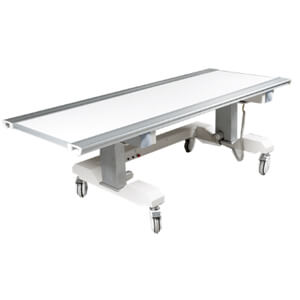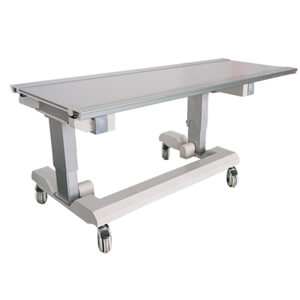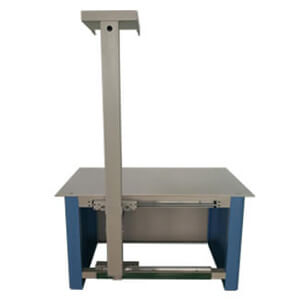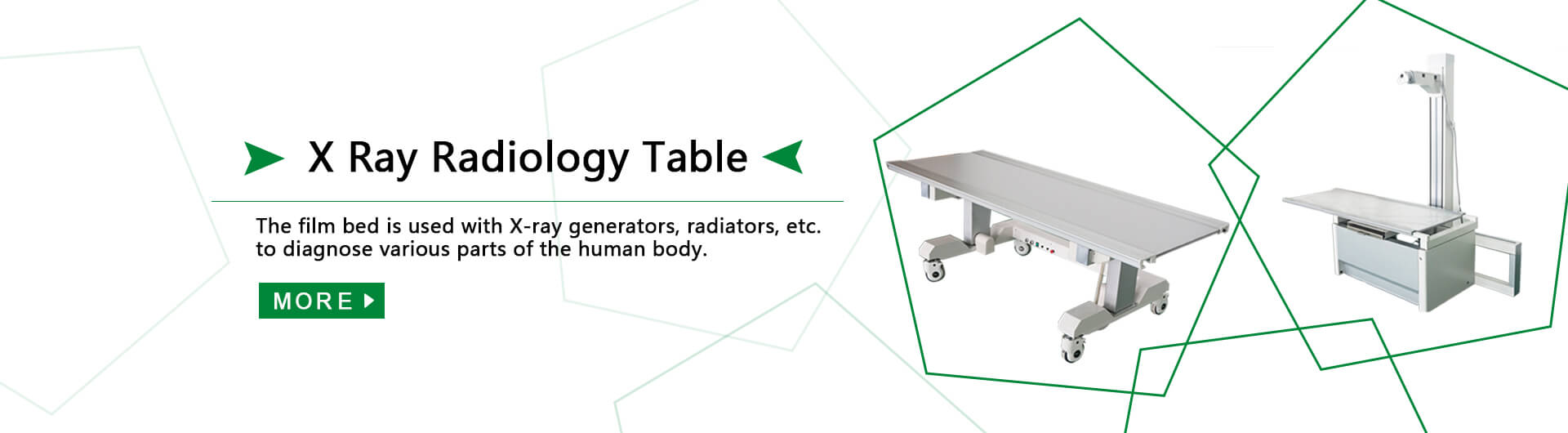

When procuring medical furniture for imaging or diagnostic suites, many facility managers mix up two commonly used pieces of equipment: the X-Ray Radiography Table (also widely referred to as X-Ray Bed & Table in procurement and clinical settings) and the general Examination Table. While they may look similar at first glance, their design, core function, and intended use cases differ significantly. Choosing the wrong one can compromise image quality, slow down clinical workflows, or reduce patient comfort. Below is a detailed, side-by-side breakdown of their distinctions to guide your purchasing decisions.
1. Functional Differences
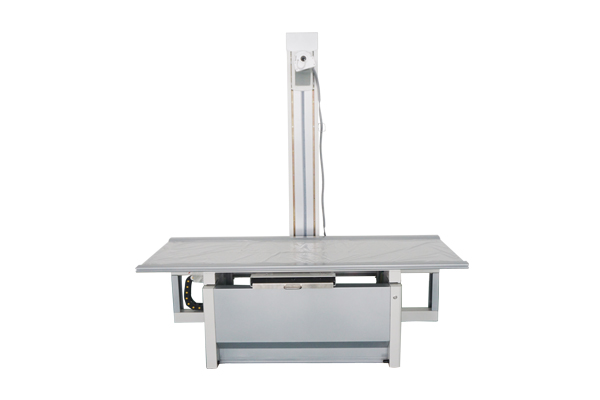
X-Ray Radiography Table (X-Ray Bed & Table)
Purpose-built exclusively for radiographic imaging, these tables are designed to work in tandem with X-ray generators, mobile DR systems, and C-arms. Their primary function is to position patients precisely so target anatomical sites (e.g., chest, abdomen, limbs, lumbar spine) align perfectly with the X-ray beam for high-quality, low-distortion images. Most models support adjustable height, tilt angles, and 6-way floating tabletops to accommodate different projection requirements (e.g., PA chest views, lateral lumbar projections).
General Examination Table

These tables serve a far broader range of non-imaging diagnostic scenarios, including ultrasound scans, electrocardiograms (ECG), routine physical exams, and minor outpatient procedures. They prioritize flexible patient positioning to support physician workflow, with features like adjustable backrests, height settings, and tilt functions tailored to comfort-focused exams. Unlike X-ray tables, they are not optimized for radiographic alignment or detector compatibility.
2. Structural Differences
X-Ray Radiography Table (X-Ray Bed & Table)
The tabletop is engineered for minimal X-ray attenuation and scatter. It is almost always made of fully radiolucent materials such as carbon fiber or medical-grade acrylic, which allow X-rays to pass through cleanly without degrading image clarity. Most units also include integrated positioning aids, including laser alignment lights, centimeter-scale markings, and built-in cassette trays for flat panel detectors or CR cassettes, to help technicians target the correct anatomy accurately.
General Examination Table
Patient comfort is the top priority for these tables, so tabletops are typically padded with high-density foam and upholstered in antimicrobial, easy-to-clean vinyl. Structural features vary by intended use: ultrasound exam tables often include side shelves for probes and coupling gel, while ECG tables may have built-in electrode lead management ports. Importantly, their frames, padding, and internal supports are not radiolucent, so they cannot be used for X-ray imaging without causing severe image artifacts.

3. Application Scenarios
X-Ray Radiography Table (X-Ray Bed & Table)
These tables are exclusively deployed in radiology departments, standalone imaging centers, and orthopedic clinics for diagnostic X-ray exams. Common use cases include chest PA/LA projections, abdominal X-rays, extremity imaging, and lumbar spine assessments. They are a mandatory piece of equipment for any facility offering routine radiographic services.
General Examination Table
You will find these tables across nearly all clinical departments: ultrasound suites, ECG rooms, primary care consultation offices, gynecology clinics, and minor procedure rooms. They are configured differently based on departmental needs—for example, bariatric exam tables for weight management clinics, or low-height adjustable tables for geriatric care.
Critical Safety Note
Never use a standard general examination table for X-ray imaging. Non-radiolucent padding and metal frame components will block X-rays, create undiagnostic image artifacts, and may scatter radiation, putting patients and clinical staff at risk. If your facility requires a dual-use solution for small spaces, look for specially certified radiolucent exam tables explicitly rated for both imaging and general diagnostics.
Quick Selection Rule of Thumb
• Choose an X-Ray Radiography Table (X-Ray Bed & Table) if your primary use case is diagnostic X-ray imaging, and you need radiolucent materials, precise positioning aids, and compatibility with DR/CR detectors.
• Choose a General Examination Table if you need versatile furniture for non-imaging diagnostics (ultrasound, ECG, physicals) and prioritize patient comfort and multi-scenario adaptability.
Author:Newheek-Table
Tel: +86 13356723728
E-mail: newheekaide@gmail.com
Company: Weifang Newheek Electronic Technology Co., Ltd.