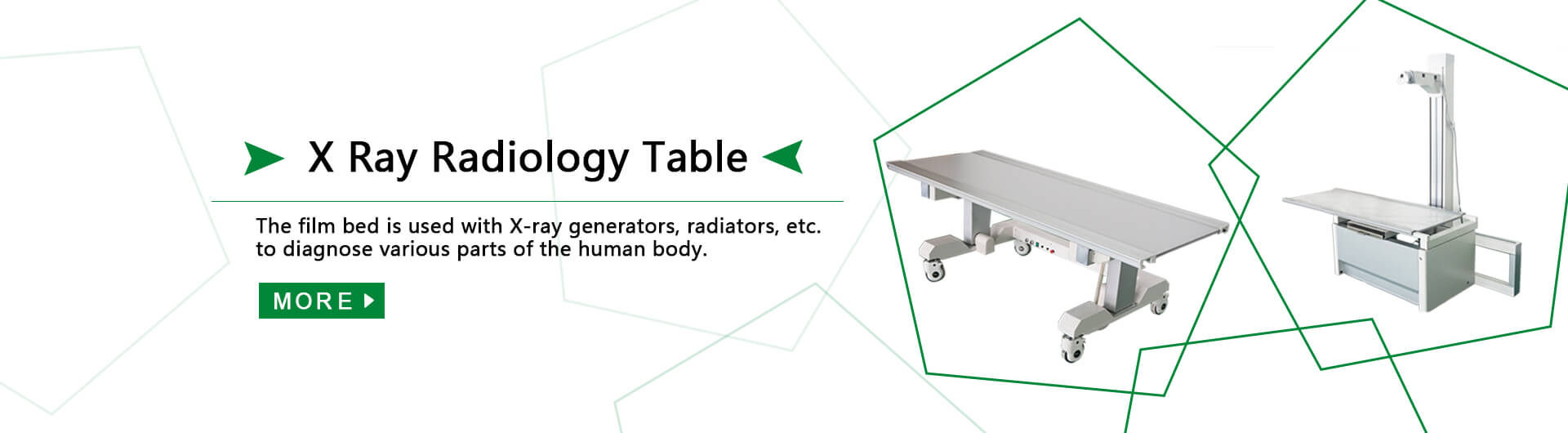
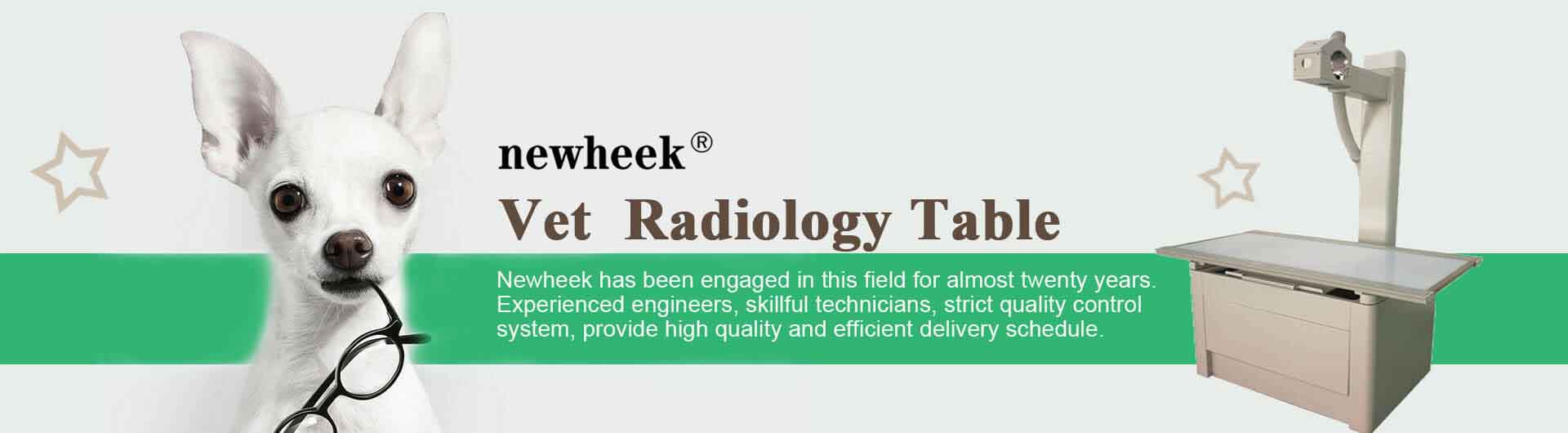
The purpose of using a bucky on the radiography table is to hold and position the X-ray cassette or digital detector in place during the examination. It is a tray-like device built into the table, and it does three things at once: it holds, it shields, and it gives the patient something flat to lie on.
Most descriptions stop there. What makes a bucky worth understanding is that the grid inside it has a focal distance, and the table has a height – and if those two do not agree, the grid quietly removes part of the image you needed.

Image quality. The bucky keeps the cassette or detector stable and square to the beam during the exposure. A detector that shifts by a few millimetres between the scout and the exposure turns a sharp edge into a soft one, and the repeat is charged to the patient.
Radiation protection. The grid inside the bucky is made of lead strips and sits directly over the cassette. It absorbs scatter that would otherwise reach the detector as fog, which is what keeps contrast usable on a thick abdomen or a lateral lumbar spine.
Workflow efficiency. The tray pulls out, the cassette goes in, the tray goes back. No aligning a loose cassette against the patient’s body, no guessing whether it is centred on the beam.
Patient comfort. The bucky gives the tabletop a continuous, even surface. A patient lying on a bare cassette feels every edge, and an uncomfortable patient moves.
Take the grid out and a bucky is a tray. The grid is the part that changes the image, and it brings two numbers with it.
The first is grid ratio – how tall the lead strips are relative to the gaps between them. A higher ratio removes more scatter and also removes more of the primary beam. The usual rule is to match ratio to kV: 8:1 around 80 kV, 10:1 around 100 kV, 12:1 around 120 kV, 14:1 at 140 kV.
The second is focal distance. A focused grid only works at the distance it was designed for. Our tables specify a focus-to-grid distance of 113 cm at the lowest tabletop position, and the tube bracket mounting holes sit at 110, 114 and 118 cm. Those numbers are not decoration – they are the range in which the grid is doing what you paid for.
| Specification | Value |
|---|---|
| Tabletop dimensions | 140cm×72.5cm |
| Tabletop material | Acrylic |
| Tabletop height | 900 mm |
| Tabletop lateral travel | 40 cm |
| Tabletop longitudinal travel | 90 cm |
| Focus-to-grid distance | 113 cm at lowest level |
| Tube bracket mounting holes | 110 / 114 / 118 cm |
| Grid ratio guidance | 8:1 at 80 kV, 10:1 at 100 kV, 12:1 at 120 kV, 14:1 at 140 kV |
A focused grid has lead strips angled toward a line of convergence. At the design distance, the beam travels along the strips and passes; away from it, the beam crosses the strips and is absorbed.
The visible symptom is a film that is dense in the middle and fades toward the edges – which looks like a tube problem or a processing problem, and is neither. It is a grid being used off its focal distance.
This is why table height matters more than it looks. If the tabletop is raised and the tube is not moved, the focus-to-grid distance changes, and the grid starts cutting the edge of the field. On a table with 900 mm top height and a 113 cm design distance, that margin is thinner than most people assume.
The same logic applies to the SID you habitually use. If your chest technique assumes 180 cm and your grid is focused at 113 cm, you are not using a grid – you are using a lead filter with a pattern in it.
Paediatric work at low kV. Below roughly 60 kV the scatter fraction is small, and a high-ratio grid removes more primary radiation than scatter. Many paediatric protocols use no grid at all, or a low-ratio one.
Extremity work where the part is thin. A hand or a wrist produces very little scatter; a 12:1 grid over it just costs dose and mAs.
Any exposure where the geometry cannot be held. A grid that is tilted relative to the beam cuts across its own strips, and the result is worse than no grid. If the patient cannot lie flat against the table, take the grid out.
The focus-to-grid distance against the SID you actually use. If they disagree by more than a few centimetres, either the grid changes or the technique changes.
The tabletop travel. Our table moves 40 cm laterally and 90 cm longitudinally, on a 140cm×72.5cm top. That travel is what lets you centre a tall patient without asking them to shuffle down the table.
The cassette path. A 14 x 17 inch tray is not a 17 x 17 inch tray. If your detector is larger, the bucky has to be specified for it – and that decision is made at the order, not at installation.
What does a bucky actually do on a radiography table?
It holds the cassette or detector in a fixed, square position under the tabletop and puts a grid in the beam path. The holding gives you a stable exposure; the grid gives you contrast on thick anatomy.
Why does the film come out dense in the middle and pale at the edges?
Usually the grid is being used away from its focal distance. A focused grid only works at its design distance – 113 cm on our tables at the lowest position. Move away from it and the beam starts crossing the lead strips instead of travelling along them.
Should I always use the grid?
No. Below about 60 kV, and on thin parts like a hand or wrist, the scatter is small and the grid removes more primary radiation than it saves. Paediatric and extremity protocols often run without one.
How do I choose the grid ratio?
Match it to your kV. 8:1 at 80 kV, 10:1 at 100 kV, 12:1 at 120 kV, 14:1 at 140 kV. A ratio above what your kV justifies costs dose without improving contrast.
Will a 17 x 17 inch panel fit the bucky tray?
Not a standard 14 x 17 inch tray. If your detector is larger, the tray has to be specified for it at the order. This is not something that can be adapted after installation.
We build the table, the bucky and the detector side, so the tray size and the grid focal distance can be checked against your technique before the order.
radiography table with bucky · floating table · acrylic tabletop table · contact us
Email: newheekaide@gmail.com
Author:Newheek-Table
Tel: +86 13356723728
E-mail: newheekaide@gmail.com
Company: Weifang Newheek Electronic Technology Co., Ltd.